
January Book Report # 2
My Four Reading Practices, Tiny Habits, Body for Life, and More

Table of Contents
Four Reading Practices
Every month, I’ll share a brief book report covering some of what I’ve read and how I’ve used mnemonics to help store those books into my “memory palace”, or as the author Tony Judt would say, “memory chalet”. A memory chalet is a lot less obnoxious a term, and cozier too, so I think I’ll use it going forward.
My reading practice right now can be divided in four sections: spite reading, integrative reading, and contemplative reading. Spite reading is all the books I’m re-reading from my youth that I still have on hand. I call it spite reading because, well… I’m basically re-reading them out of spite for my old reading habits. If I had used my current reading strategies on these books decades ago, I would still remember their contents. Instead, I barely remember anything at all.
In my last book report, I talked about Way of the Bull by Leo Buscaglia, a book that once inspired me to hitch hike across the country. And yet I did not remember a single damn one of the author’s adventures. It felt like I was reading the book for the first time, despite the huge roll it played on a very formative experience of mine.
Integrative reading involves reading (or re-reading) books that I plan on putting into practice, so this will be the more hands on, how-to type books.
Contemplative reading is for heavier, deeper books that can enrich my experiences of the world in ways that aren’t always obvious. This is where philosophy or deep science might fall, but it also can include biographies.
Finally leisure reading is for fiction and fun stuff that I have zero intention of using any kind of mnemonics on. Sometimes I just want to read stuff as a distraction. I am thinking that it might be fun to store some works of fiction in a memory palace, but it’s not a priority at the moment. I won’t be sharing leisure reading in my book reports.
I should say that this week was a mix of integrative and spite reading, I skipped on the contemplative reading since I’m still sitting on some heavier books from prior weeks (namely Eric Voegelin’s New Introduction to Political Science, and Mary Carruther’s Book of Memory, which I still don’t feel like I’ve absorbed in a way that I find satisfying).
Spite Reading
I’ve chosen to re-read certain books from my past even though I’m at a very different place in my life. I’m doing so as a kind of atonement for being such a sloppy reader for so many years. My “library of spite” is a sort of cousin to Umberto Eco’s “antilibrary”.
The anti-library consists of books you own that you might never read. The spite library are books that you’ve read that you barely remember reading. It’s not like the books in my spite library were entirely wasted: after all, The Way of The Bull inspired me to go on a wild adventure. A lot of the books in my spite library have left their finger prints on who I am and how I engage with the world, even if my mastery of them is uh…. less than impressive.
However, I now have a reading strategy that allows me to have a deeper and longer lasting relationship with what I read. In some ways, going through my spite library is like hanging out with a different version of myself. It’s interesting (if depressing) to think about the kind of life I might have lived had I actually kept the contents of what I read at the top of my mind.
Some of the books i’m re-reading are… well, they’re not what I would choose to read today. But I’m reading them anyways, if only to see how far I’ve come (for good or ill).
The Generative Library
Most of my reading history has been something of a failure. In the end though, I did at least accomplish one of the goals I had set for myself when I was a teenager: I finally figured out how to master my memory in a way that allows me to actually remember what I read.
It took decades to get to this point, but at least I’ve reached it. Better late than never.
I’ve read plenty of how-to books over the years that I’ve never really put into practice, simply because I couldn’t remember the things I was supposed to be doing. However, with mnemonics, I can store the techniques from those books in my memory palace and create action plans to implement their ideas or techniques.
These are the “generative” books I’m reading, books meant to generate the change I failed to create over years of less-than-adequate reading practices. Right now, most of the generative books will be books I have already read but failed to put in practice.
Unlike spite-reading, which is more about having a conversation with my younger self than it is about the books themselves, generative reading is about creating a better future for myself. It’s not so much exploring my mistakes but opening up new doors using help from books I know I liked but that I didn’t have the tools to fully integrate in the past.
I have read thousands of books covering hundreds of topics, most of it was time poorly spent. However, there’s a silver lining here: since I know offhand which books resonated the most with me for a given topic, I can zero-in on specific titles I want to re-read and master. I’ve done the syntopical reading thing already, now it’s time for integrative reading that will generate actual change.
Read Real Books
This is the first year I have a good grasp on how to remember what I read. I did have most of my method in place last year, but I was still an e-books only kind of guy in 2025, and it turns out reading physical books is much better for your memory than reading digital books.
I’ll cover why that is in a future essay, but basically there’s less room for interference when reading physical books, and physical books engage more of your senses.
My reading strategies this year are similar to the ones I used last year except I’m only using them on physical books now. It’s annoying to realize that I wasted 8 months of reading in 2025 because I failed to do that one simple thing (read real books), so hopefully my dear readers will learn from my mistake: if you actually want to remember what you read, do yourself a favor and read a physical copy. You can still memorize digital books, but it is much harder than remembering physical books. The extra work isn’t worth it.
Integrative Reading
Okay, back to the topic of my generative library and the act of integrative reading (i.e: integrating what you read into your way of life). Most of what I used to read would slip out of my head the moment I put the book (or my kindle) down.
The books I read in the past did leave some traces of their knowledge with me, and that includes an appreciation for which books I feel will offer me more opportunities for growth if I ever fully mastered their contents.
This year, then, is the year I get to find out if I’m right. It should be exciting! If I am, I’ll start 2027 with a host of improved habits and skills. If I’m still living the kind of life i’m currently living in twelve months, then maybe memorizing books is for chumps and won’t be worth your effort.
Either way, it’ll be fun finding out.
Last Week’s Books: Tiny Habits
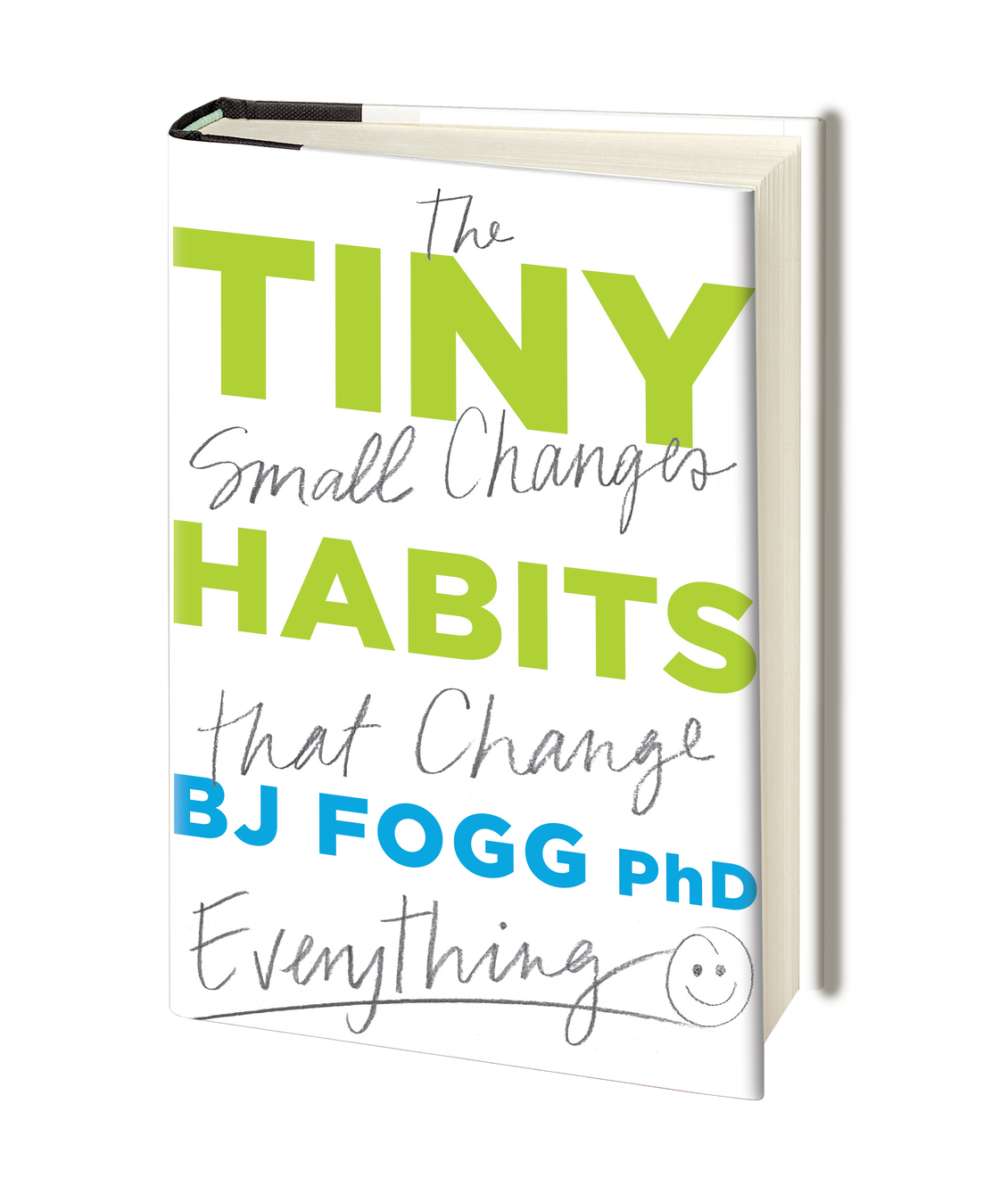
Last week, I read Tiny Habits, Body for Life, and Anthony Robbin’s Unlimited power.
Tiny Habits, by B.J Fogg, is my favorite book on the topic. I read them all, and it was just the most concise, “this is how it’s done” of the lot. It’s a blueprint for creating and breaking habits by a Stanford researcher who taught a bunch of programmers how to make addictive social media (and to his credit, I don’t think he’s thrilled about that ha).
His students included the founders of Instagram, who used his insights to help design an insanely addictive website. However, those same insights can be used for good instead of evil.
Tiny Habits is the only habit book I have any interest in memorizing. It’s good enough and it’ll get the job done.
Last Week’s Books: Body for Life
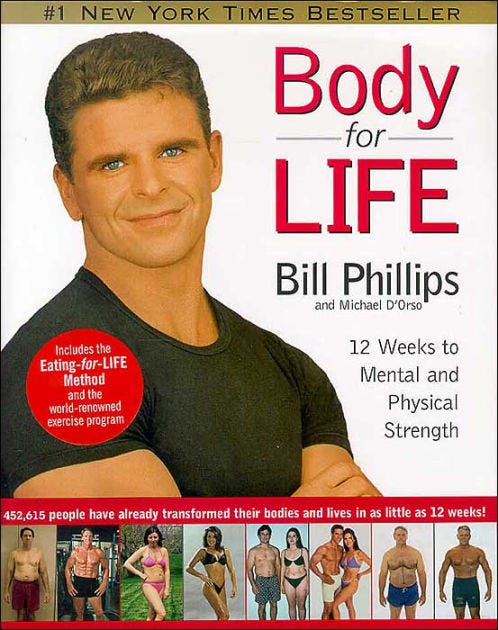
I re-read Body For Life, which is the first health book I ever read back when I was a teenager. Body For Life was written by Bill Philips, a supplements and bodybuilding guru who years ago launched a contest encouraging people to lose weight using strength training (and his supplements, of course). My 1990’s copy of the book is a bit out of date and I’m not a huge fan of Bill Philip’s “six small meals a day” approach, but it still has its strong points.
While I’m not going to use his entire system in my health practice, his techniques do work. I was friends with a fat kid in high school who read his book and followed it religiously, and he showed up after summer break to class fit like a fashion model because of it. It was impressive. He wasn’t the only one, there were other people in my social circle who were body for lifers, and they all benefited from the experience.
The main thing I’ll carry from this book will be keeping a regular diet, having an exercise plan and log, and rotating between aerobic and strength training days. I also like having a nice reminder of the different people who took part in his challenge and saw results (though of course none of the written stories will ever be as impressive as the success stories I witnessed in real life).
Last Week’s Books: Unlimited Power by Anthony Robbins
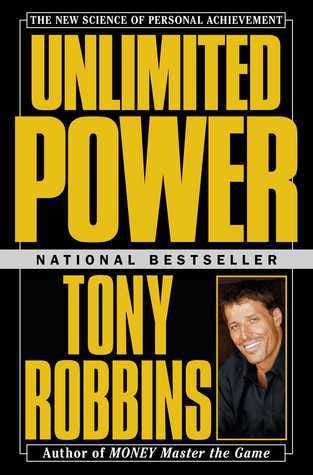
This is another book that falls into my spite-reading category. I was a huge NLP nerd as a teenager, and Anthony Robbins was the most popular guru on the subject (though my favorite was always Richard Bandler). I have since fallen out of love with NLP, but it has been interesting revisiting it.
There are valuable ideas in here on how to use submodalities or take control of internal representations, which are things I regularly do in my own practices. What I found really interesting though is how my approach to internal representations has evolved so that it’s now centred on our reactions to the non-sensed properties of forms and symbols, while his book entirely overlooks the very existence of those properties.
It’s a huge oversight.
Anthony Robbins talks about creating models of people’s internal representations in order to do the things they can do (for example, he mentions working with the military to help soldiers model specific skills). Personally, I don’t think it’s possible to build models of other people’s internal representations that don’t include an understanding of how those representations are connected to the non-sensed properties of the forms that inspired them.
It’s like building a model of the tip of the iceberg while ignoring everything beneath the water. Certain things cannot be easily recreated through the five senses, but that doesn’t mean those things don’t exist or play a role in how we go about our lives.
Manipulating internal representations is, of course, a very powerful technique, one that is generally overlooked in our society which has given short shrift to our internal senses. However, I don’t think we’ll fully draw out the power of mental imagery until we get much better at understanding of the relationship between those images and the non-sensed properties of the things they represent.
Still, I really enjoyed re-reading this book since it helped clarify my own differences with how a lot of today’s practitioners of the “internal arts” approach the subject. And even if I find his approach to mental representations wanting and roll my eyes at the mountains of woo in his book, there are still techniques in it that are useful. I wouldn’t recommend it to anyone major caveats, but I still enjoyed revisiting it.
Anyways, that’s it for last weeks reading. Check out this newsletter in seven-ish days for another book report.