Getting Started With Mnemonics - Pims Digest # 8

Welcome to the 8th edition of the Pims Digest.
Today we have four translations, a guide to starting your own memory practice, as well as our first reader’s round-up, where I’ll be sharing notes and essays by subscribers and followers.
If you’re a new subscriber, be sure sure to check out my compendium of imagery techniques as well as my memory palace atlas, both of which offer a variety of forgotten techniques drawn from the dozens of books on the art of memory that I’ve rescued from obscurity over the last few months.
New subscribers can find most of my translations over here.
I’ll also be changing the weekly digest editions to a more infrequent schedule, maybe once or twice a month instead of every Thursday.
I thank everyone for their support. I would love to hear about how you’re using your memory practices (and what you hope they’ll help you accomplish).
Translations

Jean Belot’s Easy Guide to Learning Chiromancy & Physiognomy is a compilation of three works, one on palmistry & face reading, one on the Lullian art of memory, and another a work of prophecy on the comet of 1618.
The section on the Lullian art is short but it has a very fun mnemonic device I’ll be sharing here:
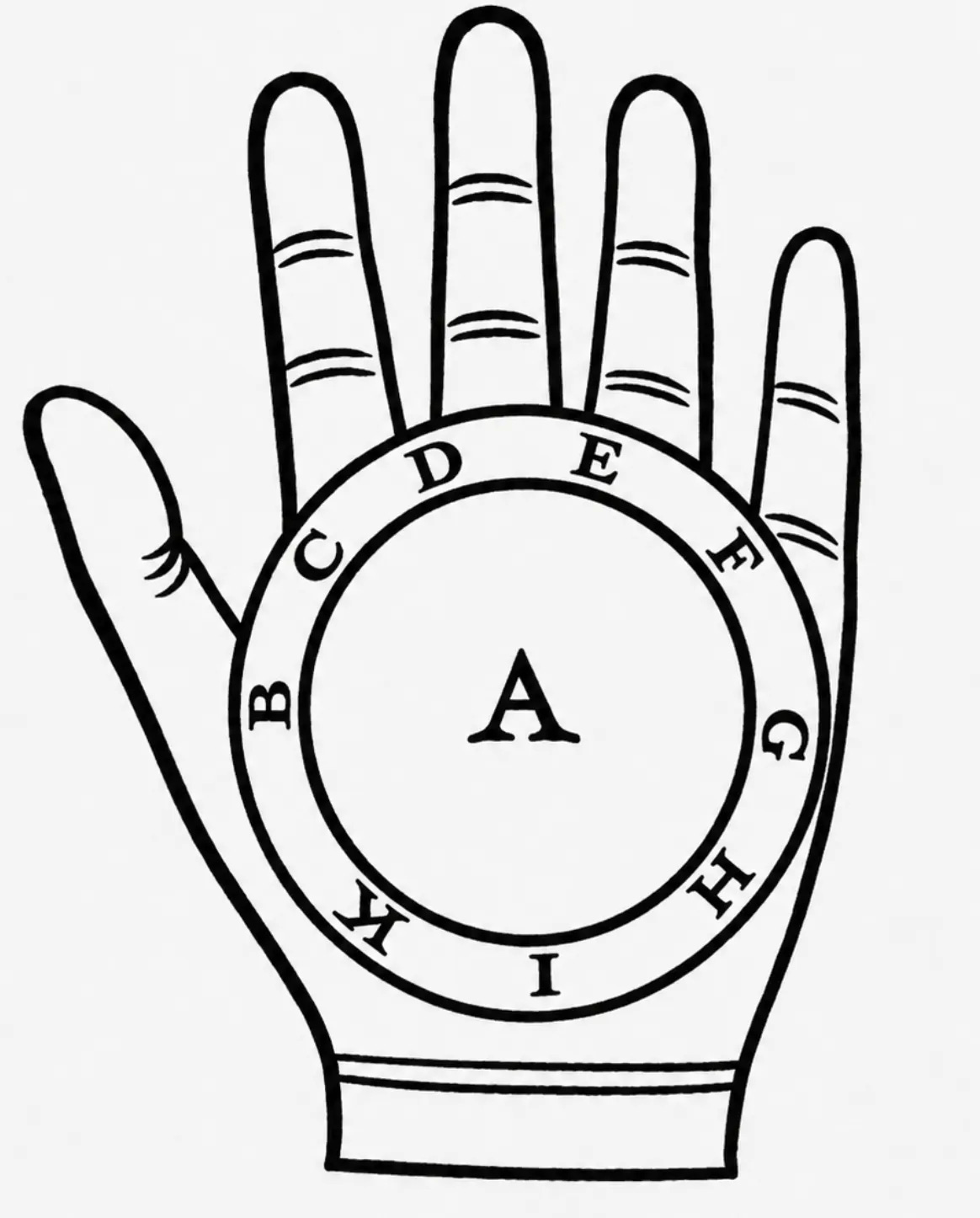
The cliffsnote version is that you put a topic in the palm of your hand, and then engage with it using the Lullian alphabet. This is an easy to repurpose technique, all you have to do is replace the values of the Lullian alphabet (which I covered in last week’s digest) with your own prompts.
Let’s say you’re a poet, and you’re working on a piece about love.
You’d put love on A, and then assign different poets to the Lullian alphabet. I’ll use some famous ones for this exercise: we’ll put Aristophanes on B, Shakespeare on C, Emily Dickinson on D, Oscar Wilde on E, Robert Frost on F, Maya Angelou on G, Homer on H, Sylvia Plath on I, Charles Bukowski on K.
You could then imagine, drawing on your familiarity with each of these poet’s works, how they might tangle with the topic. You don’t have to use persona prompts either, you could assign whatever you want to the Lullian alphabet. You could replace them with devil’s advocates who might attack your work, or with a list of questions that can help you explore different paths and avenues. Heck, you could different versions of yourself at each letter. How would you deal with love as a teenager, as an adult, at a moment of triumph, or a moment of despair?
The possibilities are limitless.
Belot also shares a brief guide to the art of combination, which lets you combine items in your memory palaces in different orders, which has many applications. I’ll be writing more about the ars combinatoria in future digests and essays.
Worth noting that Belot was a parish priest & professor,

The tractatus on artificial memory stands out for its treatment of collateral locations, which I’ve spoken about on many occasions.
Collateral locations are what make mental annotation possible. If you’re reading a book, you can use collateral locations to write down your ideas or comments on it inside your mind.
This is one of those forgotten techniques I’ve mentioned earlier, and it makes mnemonics much more practical. It’s also easy to learn.
I wrote in my esssay How to Start A Memory Practice, that I divide palaces into 3 types: the kind where you store heads, the one where you store bodies, and productive palaces. I’m still not sure how collateral items fit into that framework. Still working out the details, folks!
Besides the section on collateral location, Cusanus also offers up some useful distinctions on the different kinds of images we use in our mental palaces.
Overall, it’s a short but insightful little work that I would consider more useful than many of the more modern mnemonic books you might find on Amazon.

I’ve been slowly translating Georg Morhof’s Literary Polyhistor, a giant 1800 page series of books on how to become a polyhistor, which is a bit like a nerdier version of a polymath. A polyhistor is basically someone who has read all the books and knows all the things.
Being a polymath is easier!
On Aids To Memory is the reason the Polyhistor caught my eye in the first place. It is a fantastic review of the state of mnemonics at the time he wrote his magnum opus in the late 1600s. Morhof walks us through how the art was experienced and practiced by the people of his era.
It’s a must-read for anyone who is interested in the history of the art.

A short tract by the early-modern doctor Matheolus Perusinus, who taught medicine at the University of Padua shortly before the famed mnemonist Peter of Ravenna would work there teaching law.
This tract offers up a good theoretical overview of the art of memory with choice quotes from Hugh of St. Victor and Aristotle. The section on wonder and delight stands out, simply because it’s not something that’s always emphasized in other texts of the era:
Wonder and delight are therefore useful in these matters, because they produce attention and depth. We see the clearest sign of this in children. Because they take great delight in the shapes and signs of things, and because these things are new and unfamiliar to them, they remember them well. Hence Averroes says that a person very often remembers what he did in childhood with good recollection, because in childhood one greatly loves forms and figures, delights in them, and wonders at them.
Essays

Initially, I was expecting this newsletter to appeal more to advanced mnemonists, but they don’t seem to be interested in it at all 🤷♂️
It turns out that the people getting the most value from my writing are those who are earlier along in their memory journeys, So I’m going to start offering more resources for those of you who are just starting out.
I wasn’t expecting this, so bare with me. I’ll be making mistakes here.
I’m not always going to be clear on what pitfalls you’ll be facing in you own adventures, which is why I hope you share your struggles so I can see where you’re tripping up and try to help you get back up.
It should be noted that I do not consider myself to be an especially talented mnemonist. I’m not going to win any memory competitions anytime soon.
I have ADHD, and ADHD loves to kick my memory in the shins. My working memory is worse than most of yours. Not only that, but those of us who have ADHD have a different chronobiology that make it harder for us to encode our memories at night. We have different REM patterns, and REM is when a lot of our memories become sticky. I’m also much more sensitive to interference effects than others.
Put it all together, and when I’m not forgetting things, I’m failing to encode them in the first place because I just have fewer cognitive resources to spend on it.
This newsletter isn’t about becoming the most efficient or effective memory practitioner, but about creating a memory practice so that even people with pudding for brains (that’s me), can still use it in a way that empowers their creative and contemplative needs.
For example, mnemonics let’s me engage with a book using my long term memory instead of relying on my working memory. I don’t have much working memory to start with, so reading has often been an exercise in futility for me. I am a prolific reader because, when I was growing up, I’d forget most of what I read. So I just read more to make up for it.
Now thanks to mnemonics, I don’t have to rely on my working memory in order to parse what I read. I can store ideas in memory palaces, then engage with them in my long term memory. It has absolutely transformed the way I approach books.
I still have the attention span of a goldfish, but now I can actually process the books I’m reading so that they stick with me.
I’m sure there are other people out there who are like me, and my hope is that I’ll reach them and spare them some of my reading failures.
Before my mnemonic practice, my memory of what I read was like a cat. It would show up when it wanted to, on its own terms. Now it’s more like a dog who actually comes to me if I call for it. I like cats, but I’d rather my memories be like dogs.
Anyways, point is I am not the best memory artist around. My aims are much more modest than “memorizing all the things”. I want to memorize a few things, and hold those things in mind long enough to turn into knowledge or to put to use.

The first reader round-up edition is out. Every month, I’ll be shining a spotlight on different writers who have been supporting my work. I’m very interested in helping promising new voices find readers for their work. Since I happen to also be fairly early in my own journey, I’m not yet able to give them the attention that I’d like, but if ever this newsletter grows, I have every intention of helping my readers with newsletters find their own audiences.
Speaking of which, if you’re on Substack, but you haven’t started sharing your own writing, you should absolutely give it a try.
Writing is one of the easiest ways of improving your memory.
These were notes I took after attending Kei Kreutler’s Memory Research Group, where we discussed selections from Writing on Hands, a neat little work that collects various hand based mnemonic and computing devices. People used to use their hands as sun dials! And reckoning devices, like an abacus.
Very neat little text, and it was fun getting the chance to discuss the art of memory with other enthusiasts.

I released a small toy script for helping readers audit their memory palaces using address based retrieval. The idea is simple: if you’re memory palace uses a predictable structure, you can assign each location a numerical address based on that structure, making it possible to retrieve its contents simply by knowing its address number.
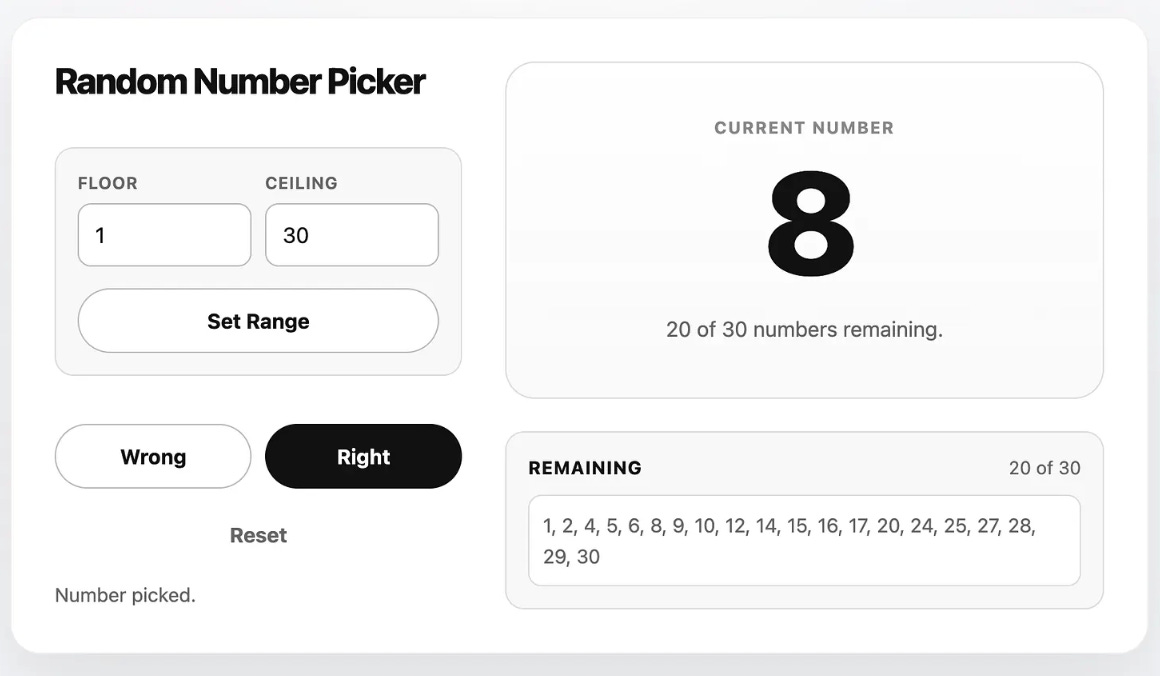
I’m not using this script, but a full app with an FSRS schedule, which I’ll share within a month of this newsletter getting 500 subscribers. The reason for that is that google doesn’t index Substacks until they reach that milestone, so there’s not much point in releasing software that users can’t find via search — unless they’re using Bing or even Yahoo, which do index smaller substacks.
Besides the address retrieval script, the essay dives into the difference between retrieval and traversal practice, which I’ll revisit again in the future. Traversal is what you do when you’re walking from one loci to another in your memory palace, while retrieval is what flashcards do when they help you retrieve a specific response to a specific cue. I believe in combining traversal and retrieval practice.
See You In July